SOLAR GATORS / AIAA STUDENT CONFERENCE RESEARCH
Battery cooling & thermal research.
Using CFD to understand battery-pack cooling, then building on that work through a university research study.
01 / SOLAR GATORS
Understanding the thermal problem.
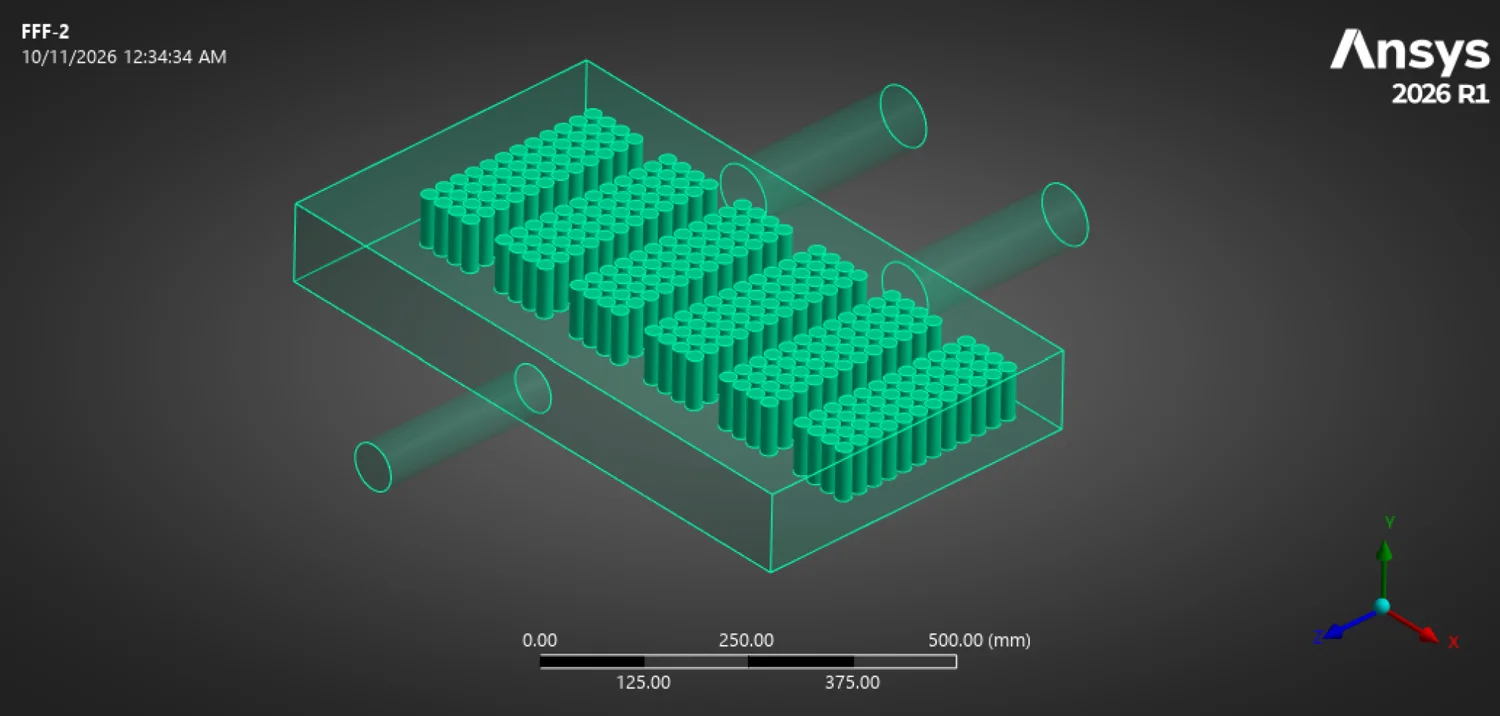
As a CFD Analyst for Solar Gators, I model battery-pack airflow and heat transfer in ANSYS Fluent to evaluate cooling performance and identify hot spots.
I work with the cell, module, and air-passage geometry to build a model of how air travels through the enclosure. This thermal-analysis work provides the starting point for the related AIAA research.
02 / BUILDING THE CFD MODEL
Resolving the flow passages.
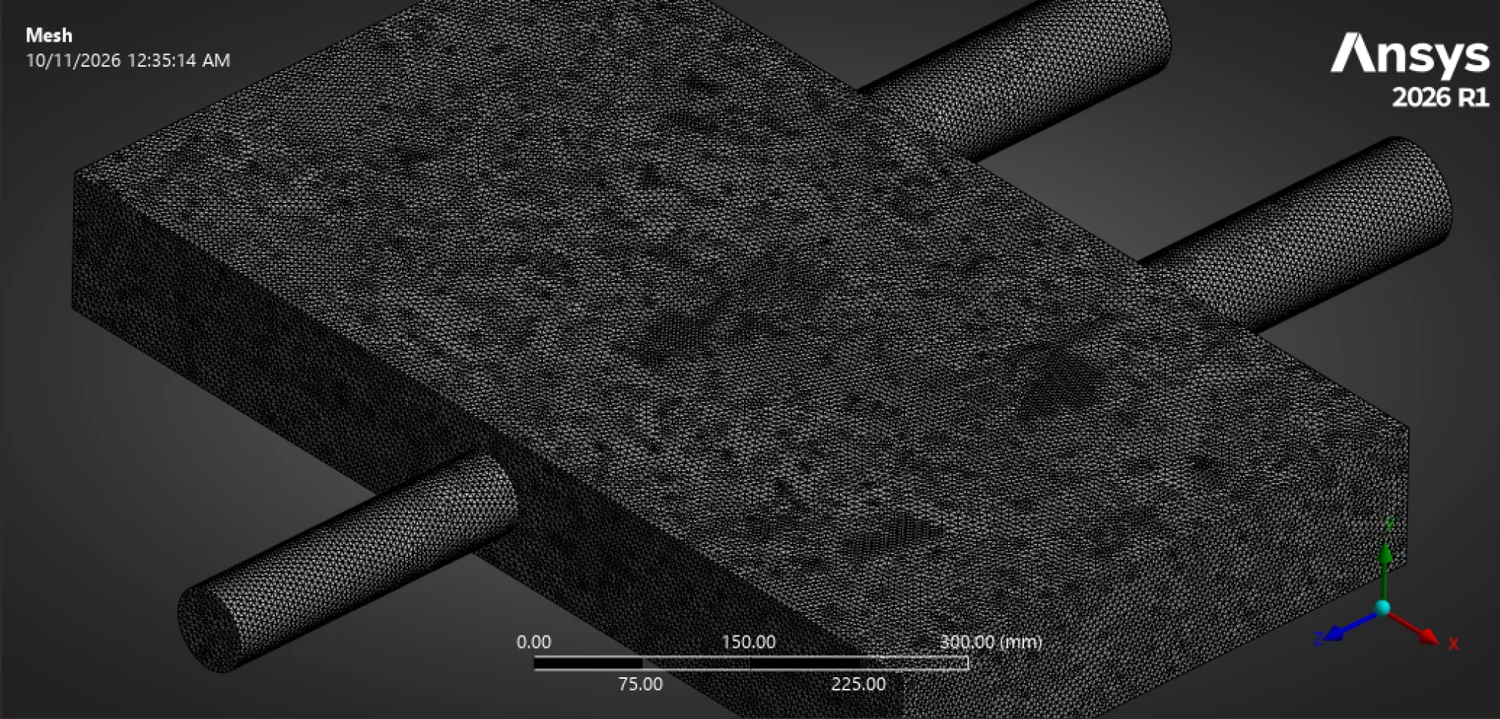
I refine the mesh and boundary conditions around the cells, modules, and flow passages. The mesh divides the air volume into cells for the numerical solution.
This stage connects the physical geometry to the solver setup and creates the basis for examining airflow and temperature distributions.
03 / READING THE AIRFLOW
Following the cooling air.
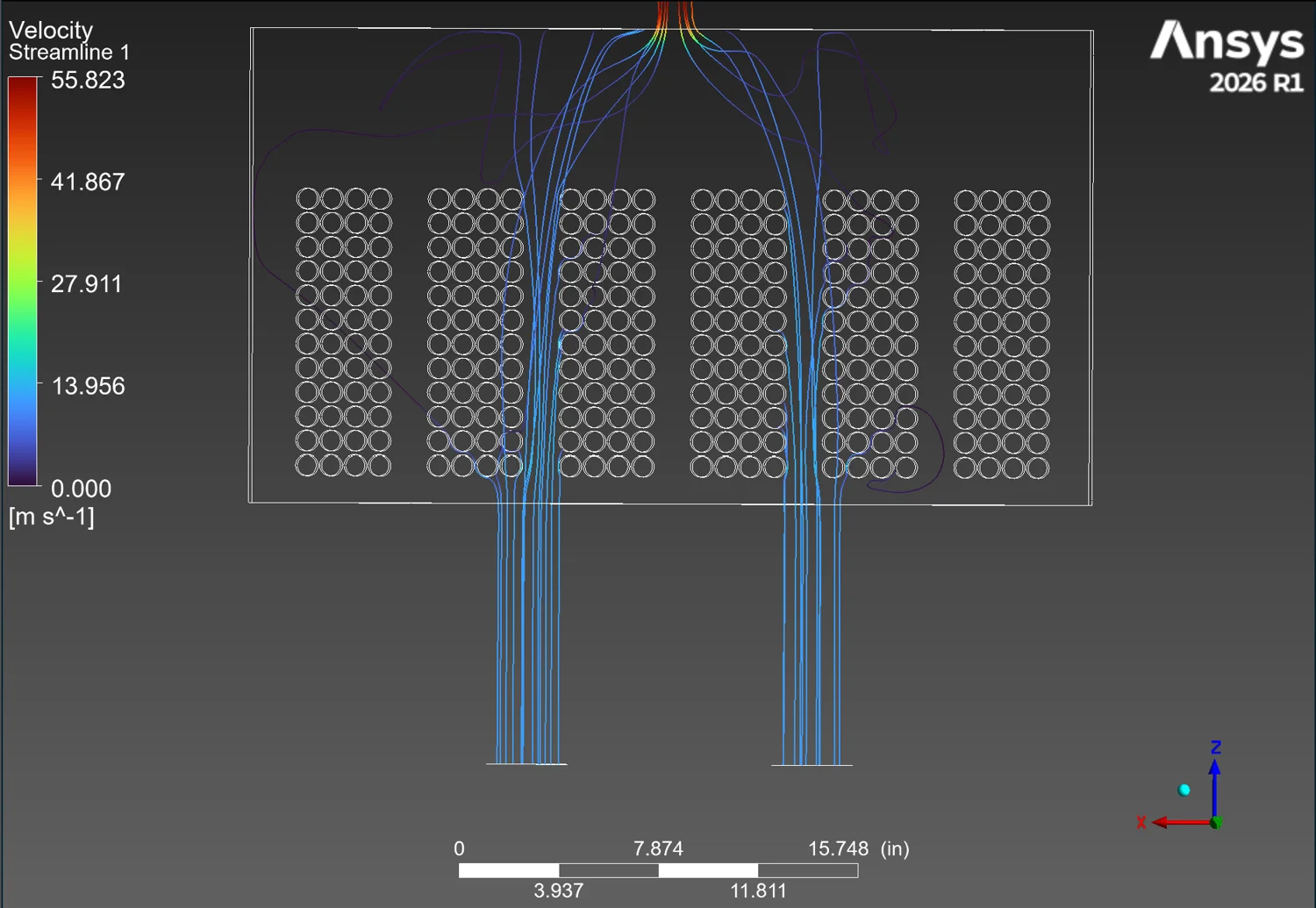
The streamlines show the paths taken by the simulated airflow through the pack. I use these views to examine how air is distributed around the cell groups and where flow is concentrated.
Looking at flow distribution alongside the thermal field helps connect cooling performance to the inlet and internal passage geometry.
04 / EVALUATING TEMPERATURE
Finding the hot spots.
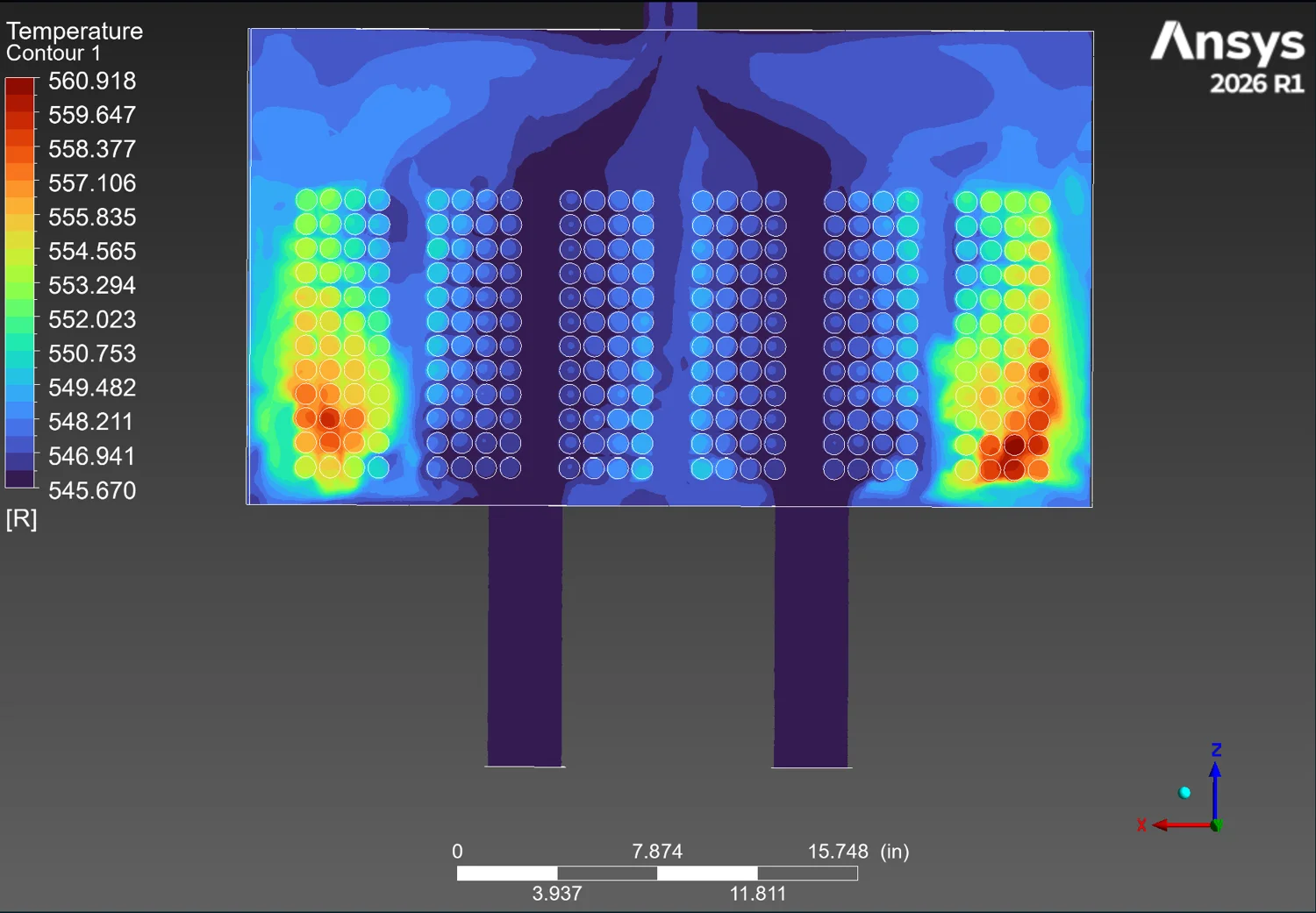
I analyze temperature and heat-transfer results to identify hotter regions and guide cooling-design decisions.
This contour shows the temperature distribution from the supplied simulation run. It is an illustration of the ongoing analysis, rather than a final comparison of cooling designs.
05 / BUILDING ON THE WORK: AIAA RESEARCH
From team analysis to a comparative study.
Working with Dr. Siddharth S. Thakur at the University of Florida, I am extending this battery-cooling work into an AIAA Student Conference research project.
The study compares straight-inlet, plenum, and Y-split configurations while keeping inlet and outlet geometry fixed. The aim is to evaluate thermal performance and airflow uniformity across the designs.
The paper is in progress for the April 2027 AIAA Student Conference. The images above show the current modeling work; they do not represent completed results for all three configurations.